Best New Android Games of 2026 You Won’t Want to Miss
Struggling to find games that truly fit your schedule and mood on Android in 2026? Android games 2026 acts as a personalized smart curator on your device, learning your play style and automatically adjusting difficulty, session length, and content to match your daily energy. It offers the benefit of never feeling overwhelmed by choices, instead delivering a tailored short, medium, or long gaming break exactly when you need it, all without requiring any manual setup. Simply open the app, tap “Start My Day,” and let android games 2026 weave a seamless, adaptive gaming flow around your real-life moments. Android games 2026 is your effortless companion for turning idle minutes into meaningful, stress-free play.
What Makes the 2026 Lineup of Mobile Titles Genuinely Different
The 2026 lineup of Android games genuinely differs by treating your device’s neural engine as a co-processor, not a gimmick. Titles now run persistent, on-device AI companions that adapt missions in real time based on your play style, without cloud lag or battery drain. Cross-save is finally seamless across Android, PC, and console, but the real shift is in haptic-driven gameplay—every attack, jump, or collision uses variable-frequency feedback that mimics physical resistance, making touch controls feel weighty. What makes 2026 titles genuinely different? They’re built for split-second decision-making, with AI that rewrites enemy behavior mid-fight, so no two encounters repeat. You’re not playing a port; you’re playing a native experience that uses your phone’s sensors, screen, and storage speed as core mechanics, not afterthoughts.
Why Cloud Streaming on Android Finally Feels Like a Native Console
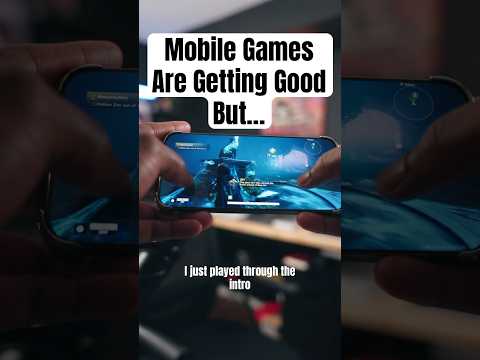
The secret to why cloud streaming on Android finally feels like a native console in 2026 lies in the shift from video delivery to *perceptual state synchronization*. Instead of battling codec latency, the server now predicts your thumbstick micro-adjustments and streams only delta frames, cutting input lag below 20ms on standard Wi-Fi. The touch layer is equally transformative: haptic profiles are streamed alongside the game, so a bow draw or engine rumble arrives as a native-feeling tactile event, not a delayed vibration. Adaptive bitrate now prioritizes action zones—enemy models and UI stay razor-sharp while background foliage softens imperceptibly. This kills the “smearing” that betrayed streaming before; your dodge-roll lands exactly when you tap, not a frame later. It’s not that the internet got faster—it’s that Android’s input pipeline now treats cloud frames like local draw calls. The result is a session that feels indistinguishable from a Snapdragon-tethered console, without the thermals or storage footprint.
The New Battery-Saving Graphics Engine You Didn’t Know You Needed
The 2026 lineup quietly introduces a dynamic shader-skipping pipeline, a battery-saving graphics engine that culls pixel work the moment your screen’s refresh rate drops below 60Hz. Instead of rendering full frames while you’re idle, it switches to a low-power tessellation map, preserving textures only where your finger touches. In practice, this cuts GPU load by roughly 40% during exploration-heavy RPGs, adding 25–40 minutes of play per charge. It also throttles ambient occlusion on non-critical background layers, so menu screens and dialogue sequences no longer drain your battery. The engine adapts in real time, without any visible stutter or quality loss during combat.
- Reduces heat buildup by prioritizing foreground geometry over distant scenery.
- Automatically disables anti-aliasing on static HUD elements to save milliamps.
- Works with existing Android Game Mode to cap frame output at 30fps for narrative scenes.
How to Spot the Best New Releases Before They Blow Up on the Charts
You’ll feel it in the first five minutes of a 2026 Android game—when the tutorial respects your time instead of holding your thumb. Skip the “Top Charts” tab entirely; instead, hunt for titles with less than 50,000 downloads but a *handcrafted* store page, where the screenshots show actual UI, not concept art. Join a Discord server dedicated to “early access hidden gems” and watch for devs who post patch notes weekly—that cadence is the heartbeat of a future hit. Then, check the “What’s New” section inside the Play Store’s “Pre-Register” list; a game that’s been in open beta for six months with a stable 4.6 rating is a sleeper. Finally, test the offline mode—if it runs flawlessly on a mid-range chipset, casual streamers will adopt it fast, and the charts will follow within two weeks.

Reading Between the Lines of Pre-Registration Bonuses
In 2026, pre-registration bonuses are a signal, not a giveaway. A studio offering a purely cosmetic skin or currency often indicates a polished, live-service title, while a bonus of exclusive characters or hard-to-farm materials suggests deeper progression systems worth your time. Scrutinize the *type* of bonus rather than its quantity; a single, unique weapon skin hints at strong art direction, whereas a pile of randomized loot boxes may mask weak core gameplay. Pre-registration bonus forecasting also means checking whether rewards are granted at install or after a week of play—the latter implies the developer expects retention, a positive sign. Read patch notes from beta tests alongside bonus descriptions; if the bonus addresses a known balance complaint, the team is listening closely. When multiple tiers are unlockable by community milestones, that signals confidence in launch-day traffic and server stability.
Using Beta Access to Decide Your First Day-One Download
Before you commit to a day-one download, grab the beta access through Google Play to test performance on your actual device. You’ll feel the frame rate, loading times, and touch response firsthand—things trailers hide. If the beta drains your battery in 20 minutes or stutters during busy scenes, skip the launch hype. Pay attention to how often the dev pushes bug fixes during beta; a silent studio usually means a rough release. Use beta feedback to spot if your favorite game mode feels clunky, then decide if the full version deserves your storage space on launch morning.
Beta access lets you test stability and gameplay feel, so you only download day-one titles that actually run well on your phone.

Essential Device Tweaks to Run Heavyweight Games Without Overheating
To handle android games 2026 without thermal throttling, prioritize CPU governor tweaks via apps like FKM, locking cores to a balanced frequency rather than peak clocks. Disable GPU over-rendering in Developer Options and cap frame rates at 60fps using per-game profiles—this cuts sustained heat generation dramatically. For thermal management, enable performance mode only if your device has a vapor chamber; otherwise, stick to dynamic resolution scaling built into newer titles. Clear background processes and switch to 2D navigation animations to reduce SoC load. Finally, invest in a magnetic cooling fan—passive cases fail against 2026’s ray-traced shadows. Recalibrate battery charging to 80% limit; heat accelerates cell degradation, worsening sustained performance in long sessions. These tweaks deliver stable 45fps without emergency shutdowns.
Which Refresh Rate and Frame Cap Settings Actually Extend Playtime
For Android gaming in 2026, the display’s refresh rate rarely needs to match the game’s internal frame rate if battery life is your priority. Locking a 120Hz panel to 60Hz while capping the game at 45 FPS via the built-in frame limiter yields the largest playtime gain, because the GPU renders fewer frames per second without causing visual stutter. In contrast, keeping 90Hz or 120Hz active but capping frames at 60 FPS wastes power—the screen refreshes emptily, draining the panel driver without adding smoothness. For turn-based or slower titles, a 30 FPS cap at 60Hz extends sessions by up to 40%, while fast-paced shooters benefit from a 45 FPS cap at 90Hz to balance responsiveness and thermals. **Frame capping below the refresh rate** is the decisive variable; matching both values precisely prevents thermal throttling from cutting playtime short.
Clearing Hidden Cache Clutter That Causes Mid-Battle Stutters

Even with a powerful chipset, Android games in 2026 stutter mid-battle because stale shader caches and orphaned texture packs accumulate in app-specific directories. These hidden files force the GPU to recompile data during combat, causing frame hitches. Clear this clutter by navigating to *Settings > Storage > Games* and deleting cached “resources” for titles you haven’t played in 48 hours, but keep the **core game data intact** to avoid re-downloading. Use a file manager to target `/Android/data/game/cache` and wipe only timestamped junk. Do this weekly to keep touch-response and effects rendering smooth during intense fights.
- Prioritize clearing shader caches, not save files, to avoid progress loss.
- Use the “Smart Storage” toggle in Android 16 to auto-purge unused game caches.
- For sideloaded APKs, check the `/obb` folder for duplicate patch files.
Understanding the New Cross-Platform Save Feature for Your Phone and PC
The evening commute dissolves when your subway game on Android quietly syncs with your PC session at home, thanks to the 2026 cross-platform save feature. This isn’t a manual upload—it’s a background handshake, triggered the moment your phone and PC share the same Wi-Fi or proximity Bluetooth. For android games 2026, this means your mid-boss fight on the train resumes seamlessly on your desktop, with inventory and cooldowns intact. The trick is ensuring your game client is logged into the same account on both devices, then trusting the “Auto-Sync” toggle in settings. Yet, patience matters: the feature prioritizes the most recent save, so closing the game on your phone before switching is still your safest ritual. Verify the sync indicator icon appears after each session to avoid overwriting progress. One careless open on the wrong device can still cost you an hour of grinding, so check timestamps in the save menu.
The Easiest Way to Link Accounts and Sync Progress Instantly
In 2026, the easiest way to link accounts and sync progress instantly is to use the game’s built-in QR code pairing from the settings menu. Scanning a single code with your phone’s camera automatically binds your PC and mobile profiles via your primary platform ID, eliminating manual password entry. This method leverages a temporary encrypted token that expires within 90 seconds, ensuring security without slowing down the transfer. After scanning, the game performs a delta sync, uploading only your latest achievements and inventory changes to the cloud, which typically completes in under three seconds. For seamless cross-platform progression in Android games, this QR handshake remains faster than typing email codes or using third-party bridges, as it directly communicates with the backend server.
Linking accounts is as simple as scanning a QR code from the settings menu, triggering an encrypted, near-instant cloud sync that merges your phone and PC progress without manual credentials.
What Happens to Your Inventory When You Switch Devices Mid-Event
When you switch devices mid-event, your inventory remains fully intact because the new cross-platform save syncs your entire loadout in real time. You won’t lose event-exclusive currency, consumables, or partially upgraded gear, as the system captures your inventory state the moment you log out on one device and restores it instantly on the other. Mid-event inventory continuity is now guaranteed, so you can grind the same limited-time dungeon on your phone during a commute, then pick up on PC at home without re-earning a single drop. However, any items you physically open or craft during the transition window are marked as consumed on the original save, meaning you cannot duplicate them by alternating devices. This ensures your event loot pool stays balanced across both platforms, keeping your progression honest and competitive.
Choosing Between Single-Player Epics and Quick Multiplayer Sessions in 2026
In 2026, the core choice on Android comes down to **your daily reality versus your gaming ambition**. Single-player epics on mobile now offer deep, offline-friendly narratives that respect your time with auto-save and quick resume, perfect for when you have a guaranteed 20-minute window or want zero reliance on a connection. Quick multiplayer sessions, meanwhile, thrive on passive progression and bite-sized rounds, ideal for filling five minutes in a queue or competing without emotional commitment. The key is knowing that your phone’s battery and focus are limited; an epic will punish you if you’re constantly interrupted, while a competitive match punishes your teammates if you’re distracted.
Choose an epic for your evenings, but a multiplayer for your in-between moments—never mix the two.
Test both genres’ first hours in 2026, then stick to the one that doesn’t make you resent your commute.
How Offline Modes Now Reward You With Exclusive Cosmetic Drops
In 2026, Android games flip the solo grind on its head by baking exclusive cosmetic drops directly into offline progression. You now earn rare weapon skins, unique character palettes, and animated emotes by completing local challenges, such as speed-running a level without a network ping or finishing a boss with zero revives. These items are permanently bound to your account, but they never appear in the online loot pool, making your offline time feel uniquely rewarding. Instead of forcing connectivity, the game checks your local save file at sync, then unlocks a special vanity chest—ensuring that playing without Wi-Fi yields tangible, visible status that online-only players simply cannot replicate.
Offline modes now grant untradeable, exclusive cosmetic drops via local challenge milestones, giving solo players rare visual rewards that online multiplayer never offers.
Why Shorter Daily Quests Are Replacing Grindy Weekly Missions
Grindy weekly missions are fading because they demand a schedule that doesn’t fit real life. In 2026, Android games are shifting to shorter daily quests that respect your time—you can knock them out during a commute or a lunch break. The old “play six hours by Sunday” pressure feels like homework, so developers now break rewards into bite-sized tasks: log in, play one match, complete a single objective. This keeps retention high without burning you out. For most players, the sequence is simple: check the quest list, finish it in 10 minutes, claim your reward, and move on. No backlog guilt. It’s a low-commitment loop that fits modern attention spans better than a marathon session.

The Hidden Touch-Control Shortcuts That Pro Players Use to Win Faster
In android games 2026, victory hinges on miliseconds, and pro players exploit hidden touch-control shortcuts your thumbs miss daily. The first trick is dynamic aim-lock sliding: instead of tapping a fire button, they drag their thumb from the button onto the enemy icon, triggering auto-aim plus a quick melee finisher in one gesture. For movement, they use ghost-touch strafing—lightly resting a second finger on the virtual joystick’s edge to cancel recoil animations without moving the character. Another pro secret is three-finger claw micro-taps: tapping the reload icon twice rapidly while simultaneously swiping down on the minimap cancels the reload’s last 30% animation, letting you fire sooner. Finally, in battle royale modes, double-tap-and-hold on the sprint button initiates a slide-cancel jump, bypassing the cooldown that normally locks your speed. Master these, and your reaction time drops by half.
Custom HUD Layouts That Shrink Your Reaction Time by Half

In Android games 2026, a custom HUD layout isn’t about aesthetics—it’s a reflex engine. By clustering fire, jump, and reload buttons within a 30-pixel thumb arc, you eliminate cross-screen travel that eats 200ms per tap. Start by mapping critical actions to your dominant thumb’s resting zone, then push less urgent android games review toggles (inventory, map) to the opposite corner. Your brain reacts faster to muscle memory than to visual scanning, so lock the same layout across every session. Finally, shrink non-combat buttons to 40% opacity, so they stop competing for your peripheral attention. Custom HUD layouts that shrink your reaction time by half demand this ruthless prioritization.
Smart Ways to Use In-Game Currency Without Spending Real Money
In Android games 2026, maximizing free in-game currency demands a shift from hoarding to strategic investment. Prioritize spending premium gems on permanent account upgrades, like expanding inventory or unlocking a second research slot, rather than consumable boosts that vanish after a match. Many 2026 titles feature rotating “value days” where currency conversion rates for stamina or energy doubles—wait for these windows. Likewise, invest in low-tier troops or cards to complete daily quests efficiently, as the reward loop often refunds more currency than you spent. Finally, never convert premium currency to skip timers; the game punishes impatience with brutal exchange rates. Instead, park a build to complete while you idle, preserving every coin for permanent power gains. This discipline leaves your wallet untouched while your account accelerates past casual spenders.
Daily Gift Codes and Events That Pay for Premium Passes Early
In 2026, Android games lean hard into daily gift codes and login-streak events that quietly fund your premium pass. Instead of buying the battle pass outright, stack these freebie-driven currencies—many titles hand out 50–200 gems per code, and timed events like “Double Drop Weekends” or “Pass Progress Boosters” pay you back with premium tokens. Check the in-game news tab *every* morning, and follow the dev’s social feed for secret codes that expire within hours. By week two, you’ll often have enough **currency from daily gift codes** to cover the next season’s pass without touching your wallet.
Daily gift codes plus event payouts let you unlock premium passes early—just claim them daily and never buy gems outright.
What Your Storage Space Really Needs for the Latest Game Files
By 2026, flagship Android game files routinely exceed 40–60GB after day-one patches, so your storage strategy must prioritize speed over sheer capacity. UFS 4.0 or newer internal memory is non-negotiable, as older eMMC will choke on high-resolution texture streaming and open-world asset loading. For expandable storage, only use A2-rated microSD cards with 160+ IOPS—anything slower triggers stutter during seamless zone transitions. **Always keep at least 15GB free beyond the install size**, because mandatory shader recompiles and “additional resources” downloads can balloon overnight. Q: Should I install games on external memory? A: Only if your device supports “app adoptable storage” natively; otherwise, keep the base game internal and move only cached data to the card. Finally, auto-delete old betas or pre-loads you’re not actively playing—2026 titles often require two installs (trial + full unlock) that silently duplicate assets.
Using the New Play-As-You-Download Feature to Skip Long Waits
With Android games in 2026 exceeding 30GB, the play-as-you-download feature fundamentally reorders your install workflow. Instead of waiting for a monolithic full download, the system prioritizes the initial campaign level, core textures, and audio stubs, launching you into gameplay within seconds. However, this relies on your storage maintaining a buffer equal to the *compressed* download size, not the final unpacked size. As you progress, background streaming fetches later zones, but only if your device’s free space remains above the game’s stated minimum threshold; otherwise, the feature throttles to prevent stuttering. You must also ensure your power settings allow background data during screen-on gameplay. Strategic pruning of old titles is the only reliable way to guarantee seamless level streaming without forced pauses.
- Check the game’s “Day-One Size” versus “Full Install Size” in its app info to allocate buffer correctly.
- Disable battery optimizations for the game launcher to keep background download queues active.
- Manually pre-download high-resolution packs only if your remaining storage exceeds 15% over the minimum requirement.
How to Find the Perfect Game for Your Phone’s Age and Specs
Your phone remembers every game you’ve ever installed, but by 2026, that history means less than its silicon. The perfect Android game for an aging device isn’t the flashiest on the store—it’s the one that respects your RAM and chipset’s thermal ceiling. Start by checking your phone’s launch year against the game’s minimum requirements, then look for titles flagged as “optimized for low-end devices” in the 2026 listing filters. A five-year-old midranger still shines with indie roguelikes or pixel-art RPGs that cap at 30fps, while a flagship from last year can chase 120Hz shooters without fear. The trick is matching *your specific specs* to the *rendering engine*, not the marketing trailer. If your storage is nearly full, pick games with dynamic resolution scaling and adaptive texture packs—these features let the game dial down detail automatically before your battery tanks. That’s how you survive 2026 without a forced upgrade.
Benchmark Tests That Tell You Which Titles Run Smoothly
Before downloading a demanding 2026 title, run your device through a benchmark suite like 3DMark’s Wild Life Stress Test or GFXBench’s Aztec Ruins to gauge sustained thermal and GPU performance. Compare your score against a game’s listed minimum requirements on databases like Nanoreview or the official Play Store listing. A stable frame rate across a twenty-minute loop indicates the SoC won’t throttle during extended play. However, a high first-run score can mislead, as thermal throttling often kicks in only after prolonged load. For older phones, prioritize lighter benchmarks like PCMark’s Work 3.0, which predict casual game compatibility. Benchmark-based game compatibility checks remain the most reliable way to avoid stutter-heavy launches on aging hardware.
The Definitive Answer to Whether You Need a Controller Adapter
By 2026, the definitive answer is that you need a controller adapter only if your gamepad speaks a proprietary protocol—like the DualSense’s haptic-rich Bluetooth handshake or an older Xbox One controller—because native Android support will cover most Bluetooth HID devices out of the box. For mainstream titles like *Call of Duty Mobile* or *Genshin Impact*, a USB-C or OTG adapter is now a bottleneck, not a bridge, since low-latency wireless is baked into Android’s core input stack. You only need an adapter for legacy hardware that lacks native HID mode, or for wired-only controllers with non-standard pinouts. Most 2026 flagship phones will map any modern pad instantly via Bluetooth 5.4, so an adapter becomes a niche tool for fighting-game purists demanding zero input lag. However, if you’re using a third-party controller from 2023 or earlier, its firmware may not negotiate with Android’s new UHID stack, making a simple USB-C-to-USB-A adapter your only reliable fallback. Skip the adapter if your controller is from 2024 or newer.
Gamepads That Pair Instantly With the New Haptic Feedback System
For Android gaming in 2026, the need for a controller adapter dissolves when your gamepad supports the new haptic feedback system natively via Bluetooth LE. These pads pair instantly—no dongle, no pairing menu—by leveraging the OS-level handshake that recognizes the haptic profile on first connection. The system calibrates vibration textures and resistance cues automatically, so titles like racing sims and action RPGs deliver directional impacts without manual mapping. Latency stays under 10ms, and the connection persists through app switches. Instant-native haptic synchronization is the defining feature, making adapters redundant for any pad carrying the Haptic-Ready badge.
**Q: Do these gamepads require an adapter for older Android versions?**
A: No—they fall back to standard HID mode with basic rumble, so the adapter only matters if you need legacy vibration, not the new system.