Beyond the PQC migration, attack vectors similar to side-channel attacks 20 and advancements in cryptanalysis 21 continually challenge the safety of established cryptographic methods. Having extra resistant cryptographic mechanisms on the ready protects infrastructures, similar to the in-depth-security paradigm 22 just in addition to, e.g., having a backup solution obtainable earlier than you urgently need it. In this ever-evolving setting, the flexibility to adapt to new threats by shortly transitioning from one cryptographic methodology to a different is more critical than ever. It ensures info safety across a wide selection of domains, from encryption protocols used in purposes like internet browsers and authentication mechanisms of cloud storages 1 to the foundation for hype applied sciences like blockchain 2. Almost any assure of trust within the IT world, be it secure knowledge change, privateness safety, or the integrity of digital transactions relies closely upon cryptography 3. Crypto-agility encompasses many various elements which all need to be taken intoaccount leading to its inherent complexity 14.
- The impression on themis the finish result of realizing cryptographic agility and therefore represents anotherrelevant half for the definition.
- For instance, within the context of data synthesis,interoperability was initially thought-about part of business continuity, whichdoes not align with the current understanding of the concept.
- Nevertheless, we count on that making an attempt to make crypto-agility typically measurable is not going to be practicable, especially not utilizing a fixed metric (e.g., level or percentages).
- Mehrez et al. additional see interoperability as an achievement of a protocol designer, who has to determine the algorithms which may be necessary to implement 31.
Our Approach
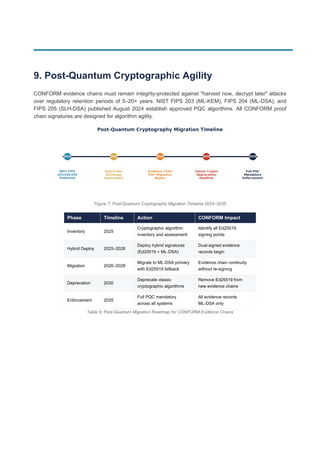
Organizations should make positive that their systems help multiple cryptographic choices and can be engineered to incorporate new ones as needed to attain cryptographic agility. This transition should occur without downtime to purposes, compromising compatibility, or requiring intense manual intervention. To ensure this, enterprises must take a cautious, strong approach to changing into crypto agile.

Stock
Mashatan et al. furtherelaborate this with “the ease with which a corporation is ready to implementcryptographic changes” 30, which is crucial formaintaining operational safety in response to emerging threats. Regarding products,cryptographic agility is crucial from the design stage onward, permitting https://newsgary.com/engine-tuning-chip.html both newand existing products to adopt up to date security measures and transition to newcryptographic primitives as required 20. The ISARACorporation also emphasizes that cryptographic agiltiy permits organizations toevolve their cryptographic methods securely and with out disruptions, significantlylowering cryptographic dangers while maintainingcontinuity 18. Historically, protocol negotiation was extensively viewed as the first strategy for reaching cryptographic agility, focusing on interchangeability of classical algorithms 37. With protocol negotiation in place, updates typically required solely an adjustment within the set of supported algorithms. Post-quantum cryptographic (PQC) algorithms introduce new challenges; their larger key and ciphertext sizes, especially in conservative code-based solutions like McEliece, often require adjustments to the protocols or key management themselves.
This wouldintroduce a bias due to the specific use-case and its setting and is, subsequently,not generalizable. This lack of generalizability, in turn, signifies that cryptographicagility can’t be generically in contrast across the variety of use-cases and contextsfound in the real world. The type of literature is our second criterion and provides an preliminary overviewof the scientific quality of the articles. Peer-reviewed on this context implies that the paper waspart of a scientific publication process, together with a peer evaluate. Paez 29 even states thatthe inclusion of grey literature can lead to much less publication bias, enhancedcomprehensiveness and a balanced provision of proof.
Organizational Adaptability
Every crypto-agile system follows a number of core principles that guide how algorithms are integrated, ruled, and replaced. These ideas create the structure that enables cryptography to evolve safely as new requirements emerge. Two structural traps deserve a particular warning, as a outcome of they are the toughest to undo. Cryptography embedded in secure boot loaders and hardware roots of belief can’t be swapped by updating software; if these mechanisms weaken, the repair is a redesign. And cryptography distributed throughout subsystems owned by completely different teams tends towards weaker total protection and fragmented visibility, as a outcome of no one holds the whole image. Agility is therefore as much an organizational design drawback as a technical one, which is the thread the rest of this publish pulls on.
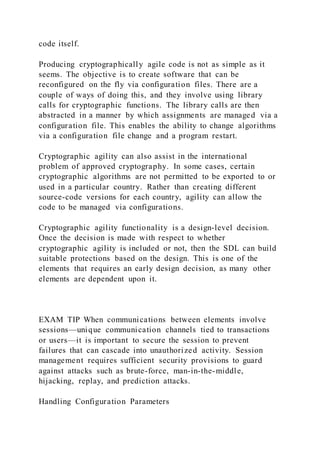
ML-DSA signatures vary from 2,420 to four,595 bytes, in comparison with Schnorr’s sixty four bytes. For blockchains with limited block space, this creates direct rigidity between security and throughput. Not Like centralized systems, blockchain information can’t be retroactively re-encrypted or re-signed. Old transactions signed with doubtlessly weak algorithms remain on-chain forever.
An HSM safeguards non-public keys, nevertheless it doesn’t maintain a searchable stock of the certificates these keys correspond to or the endpoints the place they’re deployed. Endpoint scanning, community discovery, CA APIs, CMDB correlation, pipeline scanning, and a cryptographic bill of supplies (CBOM) are what shut the hole that CT logs and HSMs depart open. Certificate Transparency logs are generally treated as a grasp inventory; they do not appear to be.
Confirming Post-quantum Tls Handshakes
The research neighborhood revisited the concept of cryptographic agility as an answer to the quantum risk, as shown by the increase in curiosity over the last years (cf. Determine 1). In nearly the entire thing of the related literature, there is a consensus that cryptographic agility is no less than necessary for coping with the quantum risk. Usually, it is even seen as the most integral part of any quantum-safe technique. Thus, the transition to PQC – “the biggest cryptographic transition in the history of mankind” 8 – is seen as a key driver of crypto-agility 6, 21 40. In the course of these migration efforts, governmental businesses and establishments have also emphasised the importance of crypto-agility for several years and consider it a significant facet for future recommendations and necessities 16, 41, 42, forty three, 44.
A practical migration roadmap sequences remediation by the mixture of algorithm publicity, information confidentiality horizon, and system replaceability. The desk under maps every main asset class to its algorithm exposure, migration priority, applicable NIST normal, beneficial owner, and the related regulatory or policy timeline. Organizations should use their CBOM findings to populate the precise count of belongings in every row before assigning migration sequencing. We design and execute the migration to NIST-approved post-quantum algorithms, prioritized by risk publicity and regulatory deadline. Abstraction layers are introduced to decouple cryptographic implementations from application logic, forming the muse of crypto agility. TrustFour is a pioneer in workload and non-human identity security, providing innovative solutions for compliance, remediation, submit quantum resiliency, and advanced threat defense.
From your safety teams to IT workers and different related stakeholders, educate everyone on the organization’s crypto agile policies and standards. Practice them to keep away from falling prey to the risks of non-compliance and the potential impacts from quantum threats. Cryptographic standards emerged in the Seventies, establishing early algorithms for symmetric-key encryption, digital signatures, and hashing.
Leave a Reply